




10 Reasons Your Cleaning Fee Isn't Profitable (and How to Fix It)
A short-term rental cleaning fee can look reasonable on your listing and still leave you short after every turnover. The gap is often hidden in labor minutes, laundry, wasted chemistry, supply runs, re-cleans, and the time spent checking the property.

The market numbers are useful context, not a pricing formula. A 2026 industry briefing puts the median U.S. short-term rental cleaning fee at $175, with a mean of $191.70. Fees vary by property size, from roughly $105 for a one-bedroom to $250 or more for a four-bedroom. Meanwhile, AirDNA forecasts U.S. occupancy at 57.4% for 2026, with supply and demand both growing about 2.7%. Your own turnover costs, booking patterns, and property standards still determine whether your fee works.
Quick Takeaways
- Measure your full cost per turn, not just the cleaner's invoice.
- Standardize chemistry, procedures, and training so results are repeatable.
- Track laundry, inventory, re-cleans, and inspections as real costs.
- Set your fee from your own documented numbers, not a competitor's listing.
Here are ten common reasons your cleaning fee may not be profitable, and practical ways to fix each one.
1. You Don't Know Your True Cost Per Clean
The diagnosis: You may be comparing the guest fee only with the cleaner's invoice. But the real cost of a turn can include labor, chemistry, laundry, restocking, inspection time, coordination, and re-cleans.
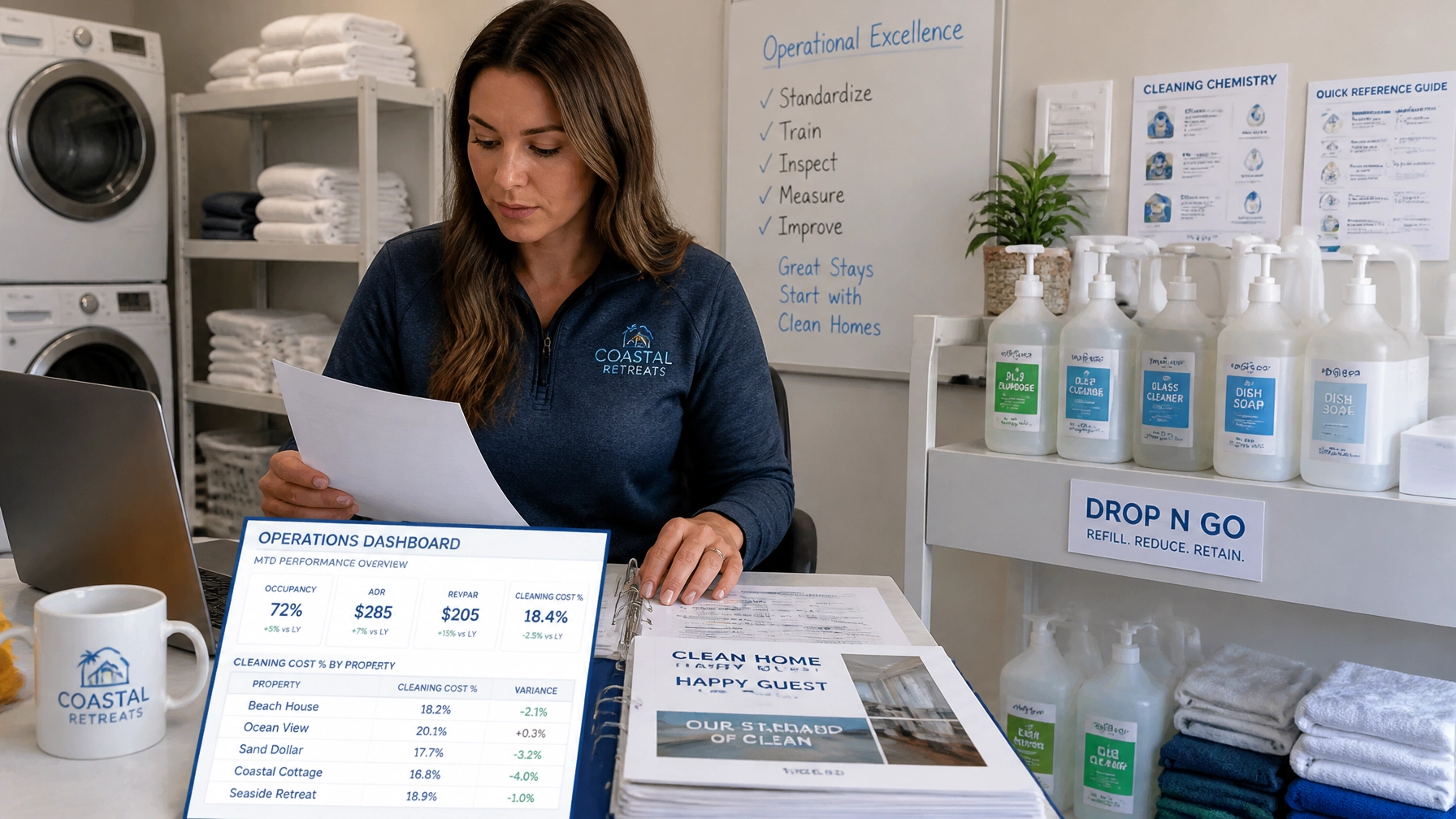
The fix: Build a simple cost-per-turn worksheet. Track:
- Cleaning labor, including any employer costs you carry
- Cleaning products and consumables
- Laundry, linen replacement, and handling
- Inspection and coordination time
- Re-clean labor and other correction costs
- Shipping, storage, and supply-run time
Compare the total with the net fee revenue you actually keep. Update the calculation using your own invoices and records. If you don't measure the full cost, you can't tell whether the fee is covering it.
2. Cleaning Chemistry Is Unstandardized and Staff Free-Pour
The diagnosis: When every cleaner mixes products differently, you lose control of dilution and usage. Overpouring uses more product than needed. Under-diluting can leave you with weak cleaning performance.
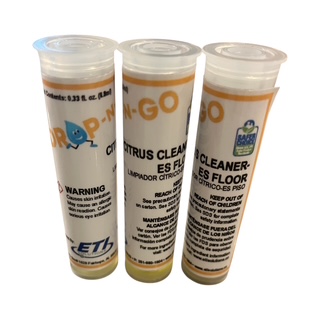
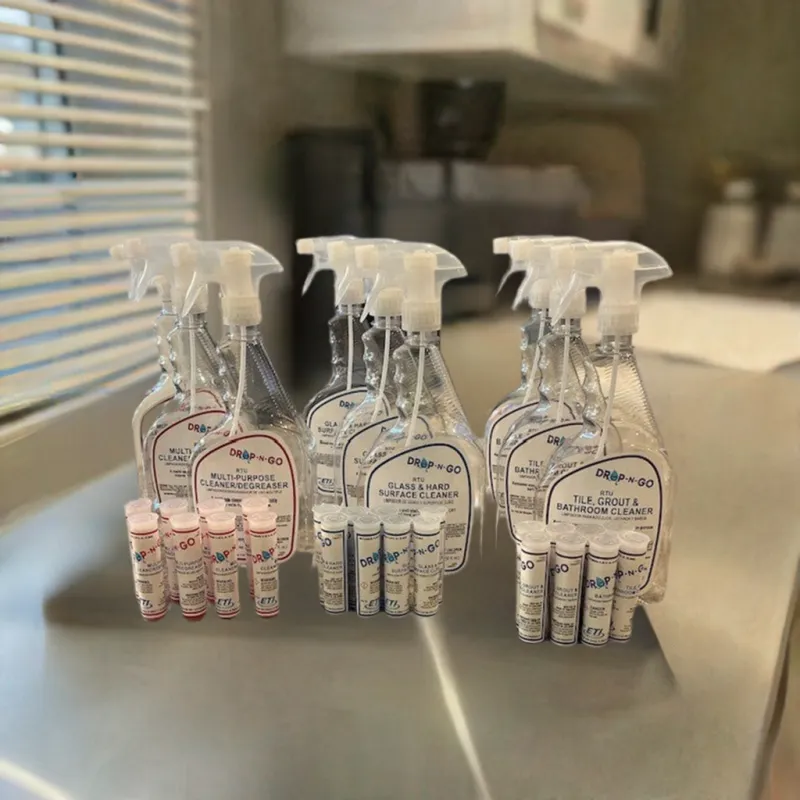
The fix: Standardize the chemistry used for each task. Give staff clear product directions, labeled bottles, and a consistent refill process. Drop N Go refillable cartridges are designed to reduce freehand measuring: insert the cartridge, add water, and shake. Explore the Drop N Go refillable system as one option for making product preparation more repeatable.
3. Chemistry Mistakes Trigger Re-Cleans
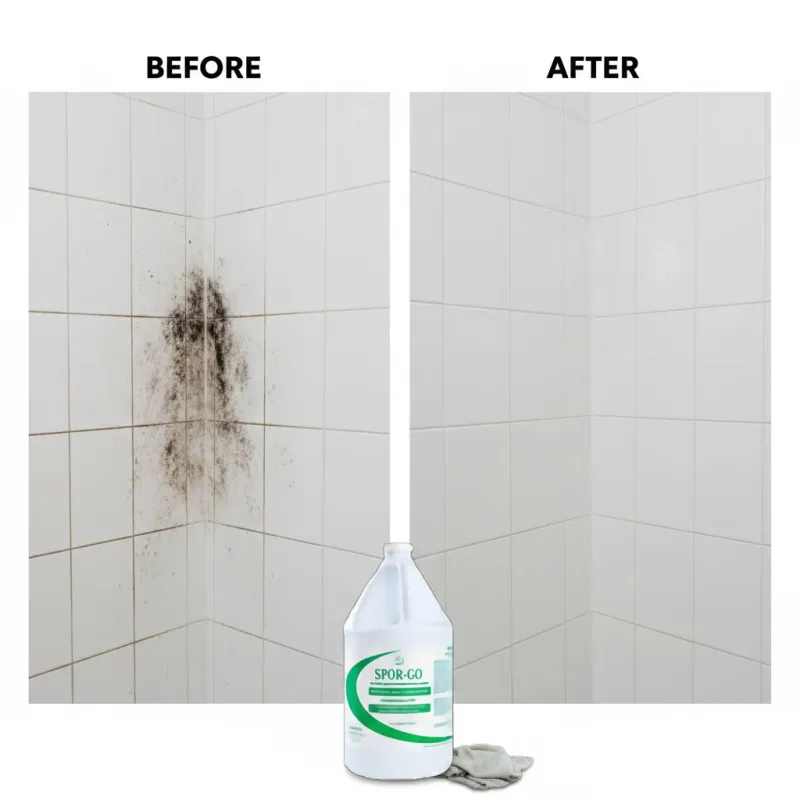
The diagnosis: A surface that still feels greasy, a cloudy mirror, or residue on a floor can mean another trip, or extra time before the next guest arrives. Incorrect product selection or dilution can contribute to these misses.
The fix: Match the cleaner to the soil and surface. Train staff on the product label, dilution, dwell time where applicable, and rinse requirements. A clear task guide helps cleaners know what to use and what a finished result should look like. Track re-cleans by cause so you can address the process, not just the symptom.
4. Ready-to-Use Products Create Storage and Shipping Bloat
The diagnosis: Bulky ready-to-use bottles can take up valuable closet space and make it harder to stock multiple properties. Frequent ordering and emergency supply runs can add friction to an already tight turnover schedule.
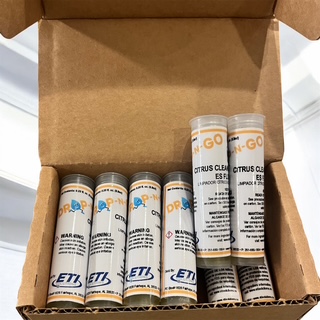
The fix: Review how much product you store, where it goes, and how often you replenish it. Concentrated or refillable formats may help reduce storage demands, depending on your operation and supply setup. Keep frequently used products organized and make sure each property has a consistent, practical par level.
5. You Have No Written Cleaning SOPs
The diagnosis: If the process lives only in someone's memory, it isn't a dependable standard. One cleaner may clean from room to room; another may follow a different sequence. Important details can disappear during a busy turnover or staff change.
The fix: Write a short standard operating procedure (SOP) for each property type. Include:
- Room-by-room task order
- Product and tool guidance
- Linen and amenity expectations
- High-touch and often-missed areas
- A final inspection checklist
Keep the SOP easy to find and easy to follow. A practical standard helps your team repeat good work, even when schedules are tight.
6. Staff Aren't Trained, or Turnover Is High
The diagnosis: New staff may be expected to learn by watching once, then work at speed. That can create inconsistent results, product mistakes, and extra questions for supervisors.
The fix: Make onboarding hands-on. Show staff how to complete tasks, then observe them doing the work and offer direct feedback. Keep training materials simple and refresh them when procedures change. ETI Solutions offers training and consulting for cleaning teams focused on more consistent cleaning processes and stronger operational systems.

7. Linen and Laundry Inefficiency Is Eating Into the Fee
The diagnosis: Laundry has a cost beyond detergent. Sorting, transport, machine time, folding, storage, missing items, and linen replacement all affect the work involved in turning a property.
The fix: Map the linen process from checkout to the next guest. Keep clean and used linens clearly separated, standardize property sets, and record shortages or damaged items. Check whether laundry is being handled at the right point in the turnover workflow. A clear process can reduce confusion and last-minute searches.
8. Inventory Is Guesswork, So You Get Stockouts and Rush Orders
The diagnosis: Without a simple inventory routine, supplies may run out at the wrong time, or pile up unused. Stockouts can trigger emergency purchases and distract your team from the clean itself.
The fix: Set a minimum stock level for essential products, tools, linens, and guest supplies. Assign someone to check inventory on a schedule and log what gets replenished. A consistent system such as Drop N Go's refillable cartridges can also make it easier to see what needs restocking. The aim is not a complicated warehouse process; it's fewer surprises before a turnover.
9. You Don't Inspect Before the Guest Arrives
The diagnosis: A clean can be complete but not guest-ready. A missed hair, streaked surface, unpleasant odor, or overlooked amenity can become a complaint, and a rushed correction.
The fix: Build a final walkthrough into your process. Use a short checklist and assign clear responsibility for confirming the property is ready. Include the details guests notice: bathroom surfaces, floors, fresh linens, visible touchpoints, and the overall presentation. Count the inspection time as part of the cost of a turn, not as invisible labor.
10. You Set the Fee by Copying Competitors
The diagnosis: A competitor's fee tells you what they display, not what your turnover costs, what services they include, or whether their setup is profitable. Matching it without checking your own numbers can leave you under-recovering costs. Setting a fee without considering the total price can also create booking friction.
The fix: Start with your actual cost and your property's service scope. Then review how your fee appears in the full booking price. In Vrbo's Built to Stay research, 66% of travelers cited unclear pricing as a booking dealbreaker. The same research reports that 86% would pay more for a higher-quality rental. It's a reminder that reliable cleanliness matters, but the total price should be clear.
Don't treat the national median as the right answer for your property. Use it as context, then compare your fee with your documented cost, your property's size and needs, and the way guests see the complete booking price.
Make Your Cleaning Fee Work for the Operation
A profitable cleaning fee starts with operational clarity. Measure the full cost per turn. Standardize chemistry and procedures. Train your team. Track laundry, inventory, re-cleans, and inspections. Then review your fee against real cost data rather than a competitor's listing.
You don't have to rebuild your entire process at once. Start by reviewing a few recent turnovers and identifying the costs that are missing from your calculation.
Frequently Asked Questions
What is the average cleaning fee for a short-term rental?
A 2026 industry briefing puts the median U.S. short-term rental cleaning fee at $175, with a mean of $191.70. Fees range from roughly $105 for a one-bedroom to $250 or more for a four-bedroom. Treat these as context, not a pricing formula.
How do I calculate my cost per turn?
Add up cleaning labor, products and consumables, laundry and linen handling, inspection and coordination time, re-cleans, and shipping, storage, and supply-run time. Compare the total with the net fee revenue you actually keep.
Should I match my competitors' cleaning fees?
No. A competitor's fee shows what they display, not their costs or the services they include. Start with your own documented costs and property needs, then check how the fee looks in the full booking price.
How can I reduce re-cleans?
Match the cleaner to the soil and surface, train staff on dilution and rinse requirements, give them a clear task guide, and track re-cleans by cause so you can fix the process.
Ready to Build a More Profitable, More Consistent Cleaning Program?
If you'd like help examining your cleaning workflow and building a more consistent program, book a low-pressure consultation with ETI Solutions. We'll look at your turnover process with you and help you find where the hidden costs are.
Sources
- AirDNA 2026 Midyear Outlook announcement
- Vrbo and Expedia Group Built to Stay report